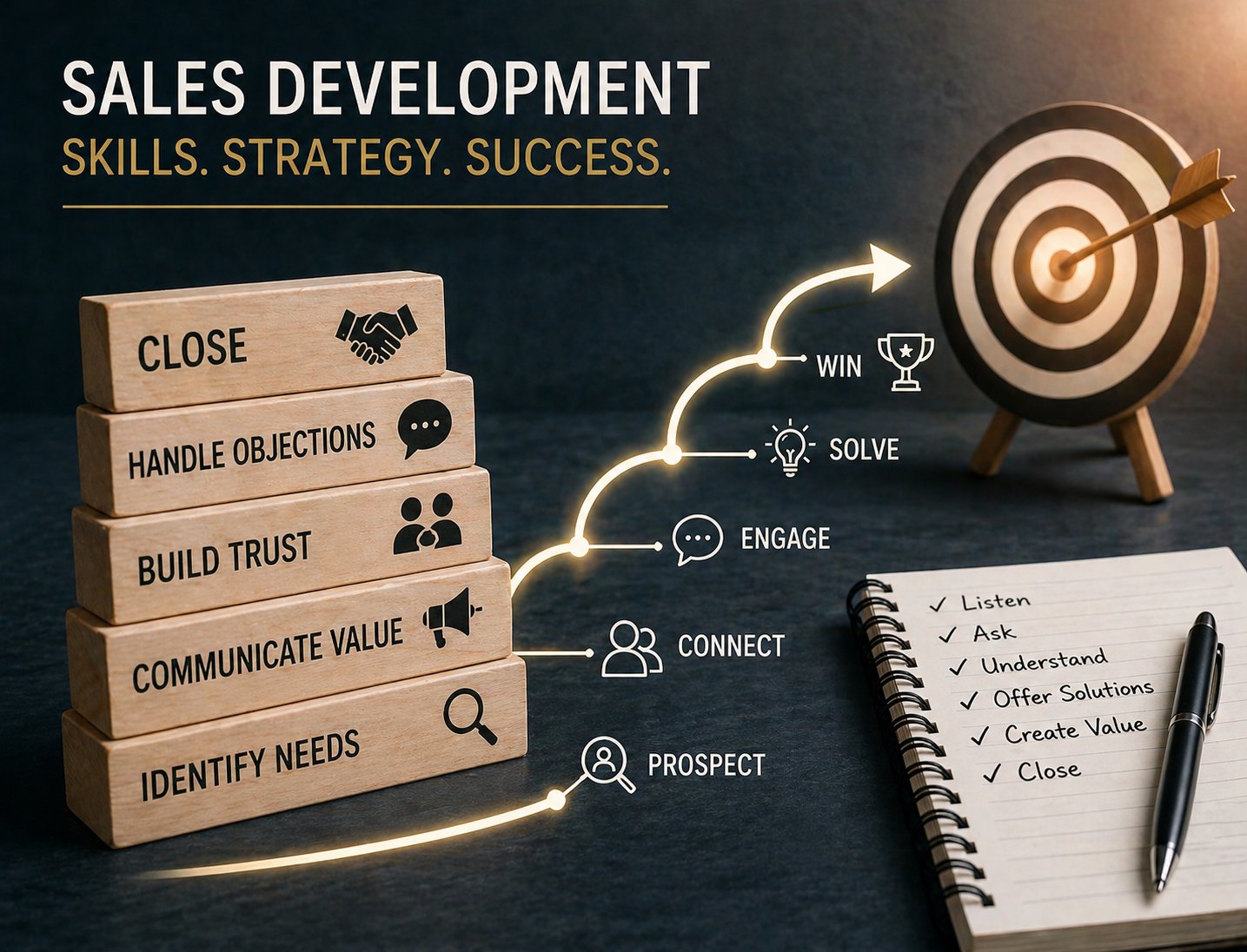
Welcome to My Master Class Series
In the fast-paced world of sales, having effective sales development skills is essential to closing deals and achieving success. If you're looking to unlock the secrets to becoming a master salesperson, you're in the right place. In the first of many Master Class Series, we'll be focusing on Sales Development Skills. Let's dive into the key strategies and techniques that will take your sales game to the next level.
From prospecting to negotiations, our comprehensive guide provides insights into every stage of the sales process. Discover the art of building rapport and how to effectively communicate value to your potential customers. Learn how to identify their pain points and tailor your pitch to address their specific needs. With a focus on practical tips and real-world examples, you'll gain the confidence and skills needed to handle objections, overcome challenges, and close deals with ease. Whether you're a seasoned sales professional or just starting out, this masterclass in sales development will provide you with the tools and knowledge to excel in your career.
The Importance of Sales Development in Business
Sales development is the backbone of any successful business. It's the driving force behind generating new leads, nurturing relationships, and ultimately closing deals. In today's highly competitive market, having a strong sales development strategy is crucial for companies looking to stand out and achieve their revenue goals.
Effective sales development skills enable salespeople to identify and qualify the right prospects, communicate the value proposition of a product or service, and navigate the complexities of the sales cycle. By mastering these skills, sales teams can increase their conversion rates, shorten the sales cycle, and generate a consistent flow of revenue for the organization.
Sales development also plays a vital role in building long-term customer relationships. When sales professionals effectively address the pain points and needs of their prospects, they establish trust and loyalty — leading to repeat business and referrals that contribute to the overall growth and success of the company.
Key Skills for Successful Sales Development
To excel in sales development, there are several key skills that professionals must possess. The first is the ability to effectively prospect and identify qualified leads. This involves conducting thorough research, leveraging data-driven insights, and utilizing various prospecting techniques to uncover potential customers who are most likely to convert.
Effective communication is another essential skill. Salespeople must be adept at articulating the unique value proposition of their offerings, tailoring their pitch to the specific needs of their prospects, and navigating the complexities of the sales conversation. This includes the ability to actively listen, ask the right questions, and respond to objections in a way that builds trust and rapport.
Adaptability and problem-solving are also crucial. Successful sales professionals must be able to quickly pivot their strategies, think on their feet, and find creative solutions to overcome challenges that arise during the sales process — whether that means negotiating terms, handling objections, or finding alternative ways to address a prospect's needs.
Effective Communication Techniques for Closing Deals
At the heart of successful sales development lies the ability to communicate effectively with prospects. This means not only conveying the features and benefits of your product or service, but also understanding the customer's needs and tailoring your message accordingly.
Active listening is one of the most powerful techniques available. By truly listening to your prospects, you gain valuable insights into their pain points, goals, and decision-making process — allowing you to craft a more personalized and compelling pitch that speaks directly to their concerns.
Open-ended questions are equally powerful. Rather than simply providing information, ask questions that encourage prospects to elaborate on their needs and challenges. This helps you gather more detailed information while demonstrating genuine interest in their perspective.
Finally, mastering the art of storytelling can be a game-changer. By weaving a compelling narrative that highlights the impact your solution can have on a prospect's business, you create an emotional connection that makes your offering more memorable and compelling.
Building Rapport and Establishing Trust with Prospects
Building rapport and establishing trust is crucial to closing deals. Customers are more likely to do business with people they feel a personal connection with and can trust to deliver on their promises.
Active listening and empathy are the foundation of rapport. By truly understanding your prospect's challenges, goals, and concerns, you position yourself as a trusted advisor rather than just a salesperson. This means asking thoughtful questions, listening carefully to the responses, and demonstrating genuine interest in their business.
Transparency and authenticity are equally important. Successful sales professionals are upfront about their products, services, and limitations — and they're not afraid to admit when they don't have all the answers. Honesty builds credibility, and credibility builds trust.
Personalization ties it all together. By tailoring your communication style and solutions to the specific needs of your prospects, you show that you understand their unique situation and are committed to helping them succeed.
The Art of Objection Handling in Sales
Handling objections is an integral part of the sales development process, and mastering this skill can be the difference between closing a deal and losing a potential customer.
When faced with an objection, start by acknowledging and validating the prospect's concern. This demonstrates that you are listening and that you respect their perspective. From there, you can work to overcome the objection by providing additional information, offering alternatives, or reframing the value proposition in a way that better aligns with their needs.
Asking the right questions is also key. By exploring the root cause of an objection, you often uncover underlying concerns or misconceptions that you can then address directly. This builds trust while resolving the immediate barrier.
Finally, successful objection handling requires flexibility. Sometimes the best approach is to acknowledge that you may not have the perfect solution right now, and offer to follow up with additional information or a customized proposal. This willingness to work collaboratively toward a mutually beneficial outcome can be exactly what secures the deal.
Sales Development Tools and Technologies
Sales development professionals today have access to a wealth of tools and technologies that can enhance their productivity and effectiveness. From prospecting and lead generation to CRM and sales automation, the right tools can be a genuine game-changer.
A robust CRM system is perhaps the most essential. By centralizing customer data, tracking interactions, and automating various sales processes, a CRM helps sales teams stay organized, streamline their workflows, and gain valuable insights into their pipeline and customer behaviour.
Sales intelligence software adds another layer — providing data and insights on potential customers including their firmographics, technographics, and buying behaviour. With these insights, sales professionals can better identify and target the most promising leads and personalize their outreach accordingly.
Communication and collaboration tools round out the toolkit. Video conferencing platforms, instant messaging apps, and team collaboration software facilitate more effective remote interactions, enable real-time sharing of information, and foster better coordination across the sales team.
Developing a Sales Development Plan
A comprehensive sales development plan is essential for any organization looking to achieve its revenue goals and maintain a competitive edge. This plan should outline the key strategies, tactics, and resources needed to attract, nurture, and convert leads into loyal customers.
At the heart of any strong plan is a deep understanding of your target audience. Conduct thorough market research, analyze customer data, and identify the pain points, needs, and buying behaviours of your ideal customers. This insight allows you to tailor your strategies and messaging to resonate with the right prospects.
Clear, measurable goals and KPIs are equally critical. Metrics like lead generation rates, conversion rates, average deal size, and customer lifetime value help you track progress, identify areas for improvement, and make data-driven decisions to optimize your approach.
Finally, your plan should address the resources needed to execute successfully — investments in sales enablement tools, training and development programs for your team, and alignment between sales and marketing to create a cohesive customer acquisition process.
Training and Resources for Improving Sales Development Skills
Continuous learning is essential for sales professionals looking to stay ahead of the curve. Fortunately, there are a wealth of training and resources available to help sharpen your skills at every stage of your career.
Formal training programs — workshops, online courses, and industry certifications — provide the latest techniques and best practices in areas like prospecting, customer engagement, negotiation, and closing. These structured programs offer a strong foundation regardless of your experience level.
Mentorship and coaching offer something formal training often can't — personalized feedback and real-world wisdom. Connecting with experienced sales leaders or joining a professional sales organization can help you navigate the complexities of the sales process and develop the soft skills that truly set top performers apart.
Staying current with industry trends and news is equally valuable. Reading sales-focused blogs, attending industry events, and networking with peers keeps you informed about the evolving landscape of sales and helps you identify new strategies and tools to incorporate into your practice.
Conclusion: Becoming a Master of Sales Development
Mastering sales development is no easy feat — but the rewards are transformative. By honing your skills in prospecting, communication, objection handling, and relationship building, you position yourself as a trusted advisor and a valuable asset to both your customers and your organization.
The path to mastery combines continuous learning, adaptability, and a genuine passion for helping others succeed. The strategies and techniques in this article provide a strong foundation — but the real work happens in the field, one conversation at a time.
Remember: sales development isn't just about closing deals. It's about building lasting relationships, solving real problems, and creating genuine value for your customers. Embrace that mindset, commit to improving your skills, and the results will follow.
Happy selling.